
(I) In-depth analysis of the heat exchange principle
In the Air Dryer Desiccant, the heat exchange principle is the core. The pre-cooled air is greatly cooled in the evaporator, thereby producing a large amount of condensed water. This process not only depends on the special design of the evaporator, but also involves the precise heat exchange principle. Through the clever guidance of the water baffle or the steam-water separator, the condensed water can flow smoothly into the sewage storage container, achieving efficient drainage.
1) Sensible heat transfer: This refers to the heat transfer method in which heat is mainly conducted through temperature difference, which is the main heat transfer method in many cases.
2) Latent heat transfer: This heat transfer method occurs when a substance undergoes a phase change under constant temperature conditions, such as solid to liquid or liquid to gas, and the heat transfer involved is latent heat transfer. In the refrigeration system, most of the heat exchange is carried out through latent heat, and a small part is also carried out through sensible heat.
(II) Overview of key components of the Air Dryer For Air Compressor
The Refrigerated Air Dryer involves multiple core components that work together to achieve efficient cooling effects. These components include compressors, condensers, expansion valves and evaporators, each of which plays an indispensable role.
1. Compressor
a. Function: The compressor is responsible for compressing low-temperature and low-pressure gaseous refrigerant and converting it into high-temperature and high-pressure superheated refrigerant vapor.
b. Type: The main types of compressors include piston, vortex, rotor, screw and centrifugal.
c. Application: Depending on the power of the dryer, the choice of compressor will also vary. For example, for dryers with a power of less than 3 horsepower, a rotor compressor is often used;
For dryers with a power range of 3 to 30 horsepower, a full piston compressor is usually used. As the power increases further, (semi) piston or screw compressors will be used.
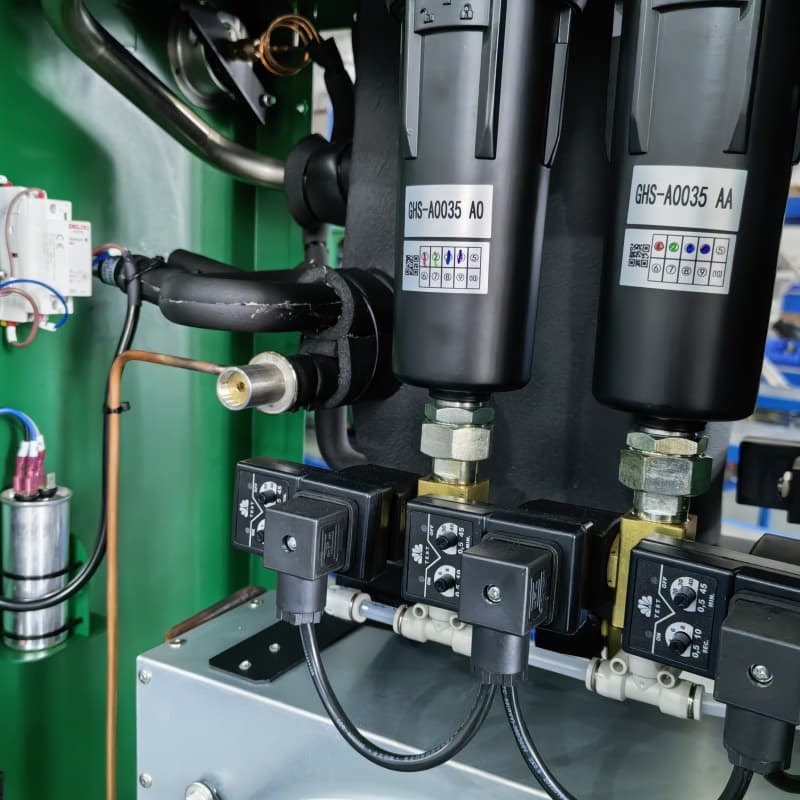
2. Condenser
a. Function: The main function of the condenser is to convert high-temperature and high-pressure superheated refrigerant vapor into medium-temperature and high-pressure liquid refrigerant through the cooling and condensation process.
b. Type: The type of condenser selected depends on the actual situation of the user. The common ones include air-cooled and water-cooled.
3. Expansion valve
a. Function: The main function of the expansion valve is to convert high-pressure and medium-temperature liquid refrigerant into low-pressure and low-temperature liquid refrigerant.
b. Type: Expansion valves can be divided into internal balanced type and external balanced type, and the choice depends on the specific application scenario.
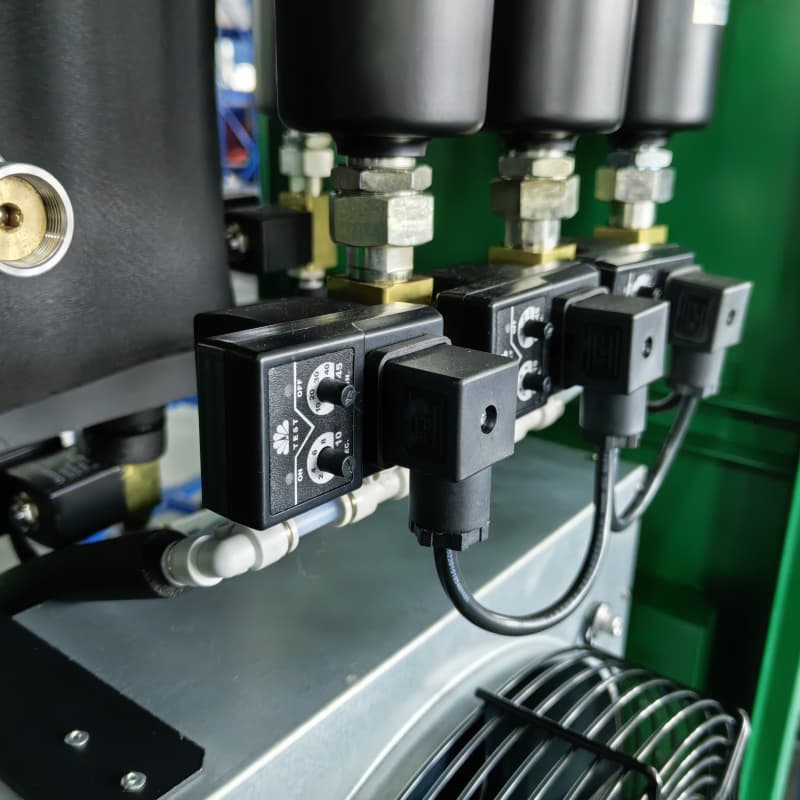
4. Evaporator
a. Function: The evaporator is a key component for heat exchange between refrigerant and air. Here, the low-temperature and low-pressure liquid refrigerant absorbs heat from the air, thereby converting into low-pressure and low-temperature gaseous refrigerant, and returns to the compressor to complete the refrigeration cycle.
b. Type: The types of evaporators include shell and tube type and plate-fin type, and the choice depends on the specific application requirements and scenarios.